
Materials


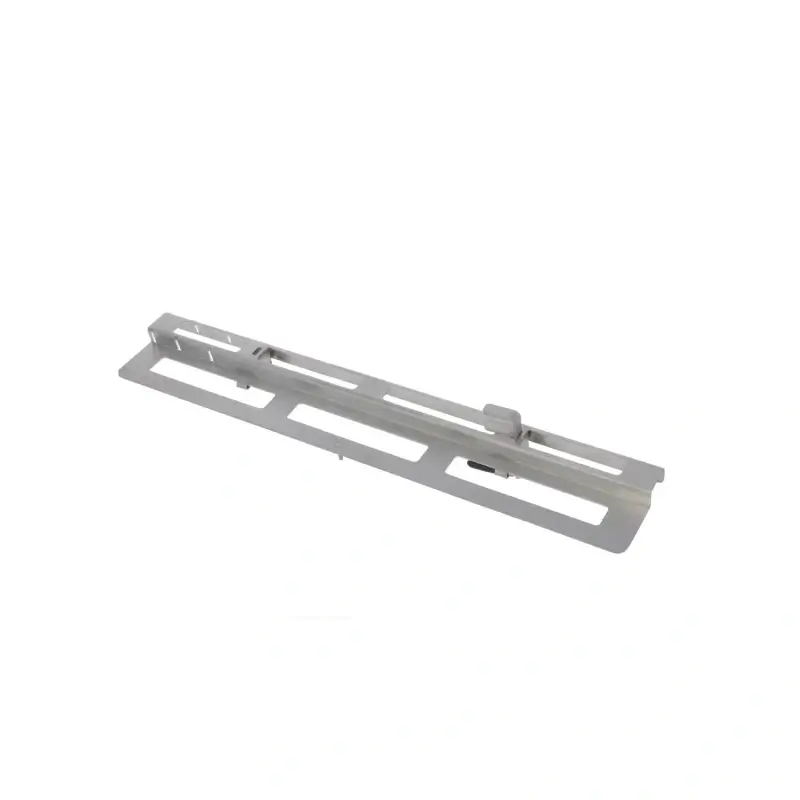





Sheet Metal Processing
Marchton Automation offers high-precision custom sheet metal fabrication services at competitive rates with quick turnaround times. Our “No MOQ” (Minimum Order Quantity) policy for custom prototype sheet metal parts and final products makes it easier for you to order only the quantity you currently require.
Our state-of-the-art equipment manufacture the most complex parts with best-in-class accuracy and precision. The extensive range of materials including metals and their alloys.
Sheet Metal Processing
| CNC Punching (Manual and CNC) | Maximum sheet size: 48″ x 120″ (1.22m x 3.05m) Maximum thickness: .125″ (3.175mm) |
| Bending (Manual and CNC) | Maximum length: 120″ (3.05m) Maximum thickness: .125″ (3.175mm) |
| Welding (Manual and robotic) | Steel, Aluminum, Stainless Steel |
Sheet Metal Fabrication Services for Custom Parts
we can supply any quantity of sheet metal parts, from low-volume prototypes to high-volume production. Marchton automation provide precision and fast delivery.
Laser Cutting
Laser cutting uses a focused laser beam to cut, etch, or engrave materials, vaporizing or melting them for precise edges and complex patterns based on designer specifications.
Bending
Bending applies a force to a thin sheet of metal to shape it into various geometries, like U-shape, V-shape, or channel shape. The thickness of the metal can vary.
Welding
Welding is the process of joining two or more metal pieces using heat, pressure, or both to form a strong bond. It combines skill and precision to create durable, sturdy metal structures.
Punching
Punching uses a punch tool to create holes or shapes by forcing it through a die, cutting the metal with a shearing action for precise, clean results in fabrication.
Riveting
Riveting is a semi-permanent joining method using mechanical fasteners (rivets) to connect sheet metal parts. It’s faster and much cost-effective than welding.
Stamping
Stamping uses dies and presses to shape flat metal sheets into different forms, creating complex, three-dimensional designs through cold-forming techniques.
Frequently Asked Questions
We specialize in multi-axis CNC machining (3-axis, 4-axis, 5-axis) and can achieve standard tolerances of ±0.02mm (±0.001″), with tighter tolerances available upon request. We work with a wide range of metals and engineering plastics.
We accept STEP, IGES, X_T, SLDPRT, and DWG/DXF files. 2D drawings with critical dimensions and tolerances are highly recommended alongside 3D files for accurate and efficient quotation.
Lead time depends on part complexity and order quantity. Standard prototypes can be delivered in 5-10 business days. For production runs, typical lead time is 2-4 weeks. Rush services are available for urgent projects.
Yes. We offer a full suite of post-processing services including anodizing, powder coating, plating, polishing, sandblasting, heat treatment, and assembly. We can deliver parts ready for final use.
We implement strict quality control at every stage: from material certification, in-process inspections (IPQC) to final quality checks using tools like CMM, calipers, and micrometers. First Article Inspection (FAI) reports and material certifications are provided with shipments.
Client IP protection is our top priority. We are willing to sign Non-Disclosure Agreements (NDAs) and have secure data management systems in place. Your drawings and designs will never be shared with third parties.
Reliable CNC Machining Solutions
We focus on delivering high-quality CNC machined parts with efficient production to meet your exact requirements.